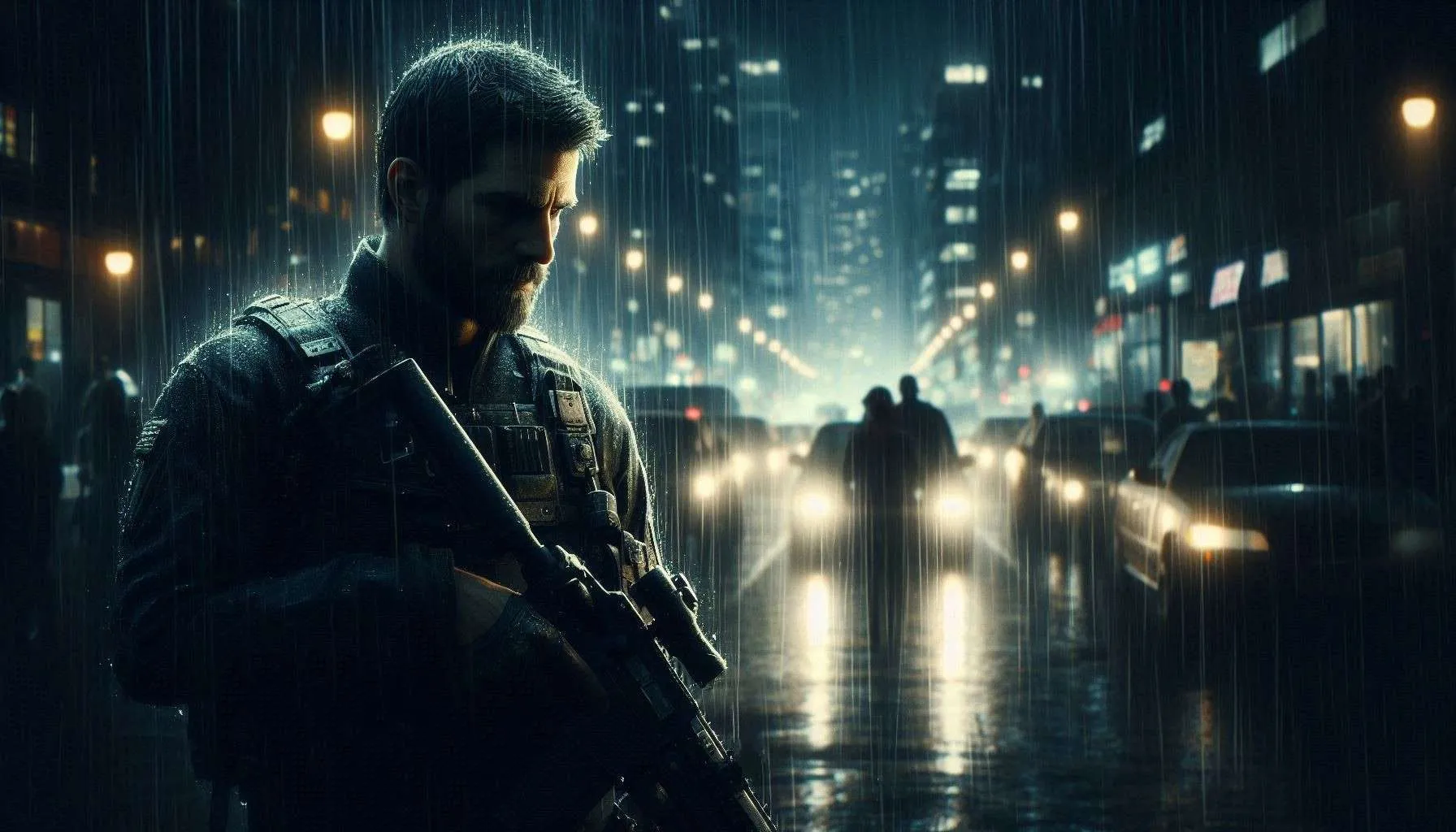
On publication day for Double Tap, the twenty-fifth installment in the late Vince Flynn’s Mitch Rapp saga, author Don Bentley returned to familiar ground. Broadcasting live from The Poisoned Pen Bookstore in Scottsdale, Arizona, Bentley joined bookstore founder Barbara Peters and former series custodian Kyle Mills to discuss his third entry in the iconic counterterrorism franchise.
Table of Contents

The interview provided an engaging look at franchise continuity, military tradecraft, and the delicate art of writing a younger, more volatile Mitch Rapp.
Returning to 1992: Filling the Cold War Aftermath
Set roughly in 1992 between the events of Denied Access and Flynn’s seminal Transfer of Power, Double Tap drops an early-career Rapp into an era defined by the aftermath of Operation Desert Storm. Saddam Hussein remains in power, having recently deployed chemical weapons against Kurdish populations.
Bentley explained that his choice to explore this specific period stemmed from both personal memory and narrative strategy. As an Army veteran who served as an Apache pilot from 1997 to 2007, Bentley remembered the persistent questions surrounding Iraqi weapons of mass destruction. He recalled watching television news in high school when President George H.W. Bush publicly encouraged the Kurds to rise up, only for Kurdish fighters to be left stranded on mountainsides awaiting American air power that never arrived.
Beyond the historical backdrop, setting a three-book arc in Rapp’s early career offered practical storytelling advantages. When pitching future storylines to long-time series editor Emily Bestler, Bentley had two concepts: one continuing directly from Kyle Mills’s finale in Code Red, and another exploring the prequel years. Bestler encouraged him to pursue the story he found most compelling.
Bentley noted that working within the established prequel boundaries allowed him to build credibility with longtime fans before making sweeping, irreversible changes to the contemporary timeline. It gave him room to develop the character without upsetting the canon Flynn and Mills spent decades establishing.

Historical Friction and Defense Technology
The early 1990s geopolitical landscape also allowed Bentley to explore fractured alliances. While modern thrillers often portray American and Israeli intelligence as seamless partners, Bentley leaned into the lingering friction caused by the Jonathan Pollard espionage case. That historical breach had severely strained relations between Washington and Tel Aviv, creating a climate where national interests frequently diverged.
Bentley drew on his own pre-writing career in the defense sector, where he worked for the U.S. subsidiary of an Israeli tactical startup. The company specialized in multispectral concealment uniforms that masked visual and thermal signatures, technology developed after an Israeli patrol suffered heavy casualties in Lebanon against Russian-supplied thermal optics. That intersection of emerging technology and complex alliances helped shape the tactical landscape Rapp navigates in Double Tap.
Mentors, Rivals, and the Early Team
Much of the conversation between Bentley and Mills focused on character dynamics and how familiar faces appear during this earlier phase of the timeline:
Stan Hurley’s Steadying Hand: In earlier prequel novels like American Assassin and Kill Shot, the legendary Stan Hurley spent considerable energy trying to either wash Rapp out of the Orion program or eliminate him entirely. In Double Tap, the dynamic begins to shift. Hurley is not yet Rapp’s peer, but he transitions into a demanding mentor who must put his own career on the line to vouch for the young operative.
Scott Coleman in Uniform: Readers accustomed to Coleman as a private contractor operating alongside Rapp see him here during the twilight of his active-duty career as the commanding officer of SEAL Team Six. Bentley noted the fun of showcasing the natural inter-service banter between Army special operations and Navy SEALs by introducing Elvis, an Army operator embedded with Coleman’s unit.
A Green Irene Kennedy: Rather than the unflappable CIA director seen in later books, Kennedy is roughly twenty-five or twenty-six years old, fast-tracked as a case officer running Rapp, yet visibly nervous during her initial briefings with the President of the United States.
Meeting Donatella Rahn in Verona: The novel’s European sequence takes Rapp to Verona, leading to an initial encounter with Donatella Rahn. Bentley drew on his own family travels through Italy to craft the chase through Verona’s winding cobblestone streets, highlighting the contrast between the impulsive, raw operative Rapp was in 1992 and the calculating professional he would eventually become.
The Shadow of Rafique Aziz: While Bentley cautioned readers that Double Tap is not the story of how Mitch receives his signature facial scar, the book establishes the operational groundwork that eventually brings Rapp into conflict with his ultimate arch-nemesis from Transfer of Power.
Preserving Lore in Long-Running Franchises
Reflecting on the broader mechanics of legacy series fiction, Mills and Bentley discussed the challenges of aging characters versus sliding timelines. Mills, who recently saw his novel Fade In released in paperback, discussed the risk of real-world events outpacing thriller plots during the typical twelve-month publishing cycle.
When taking over established characters, both authors noted that they treat Flynn’s early novels almost like sacred scripture. Even when smoothing over occasional continuity wrinkles from thirty years of publishing history, the objective remains balance: crafting accessible entry points for newcomers while planting subtle details that reward devoted fans.
While Bentley kept details regarding his next novel firmly under wraps, he certainly seems to be demonstrating deep command of Vince Flynn’s universe with Double Tap, providing readers with a detailed look at the crucible that forged counterterrorism’s most lethal operative.
I’ve yet to read Double Tap — Perhaps next year will be third time lucky becoming a Mitch Rapp ambassador! — but will be getting to it in the weeks ahead. Look out for my full review coming soon. For now, watch the full interview with Don Bentley below.


Leave a Reply