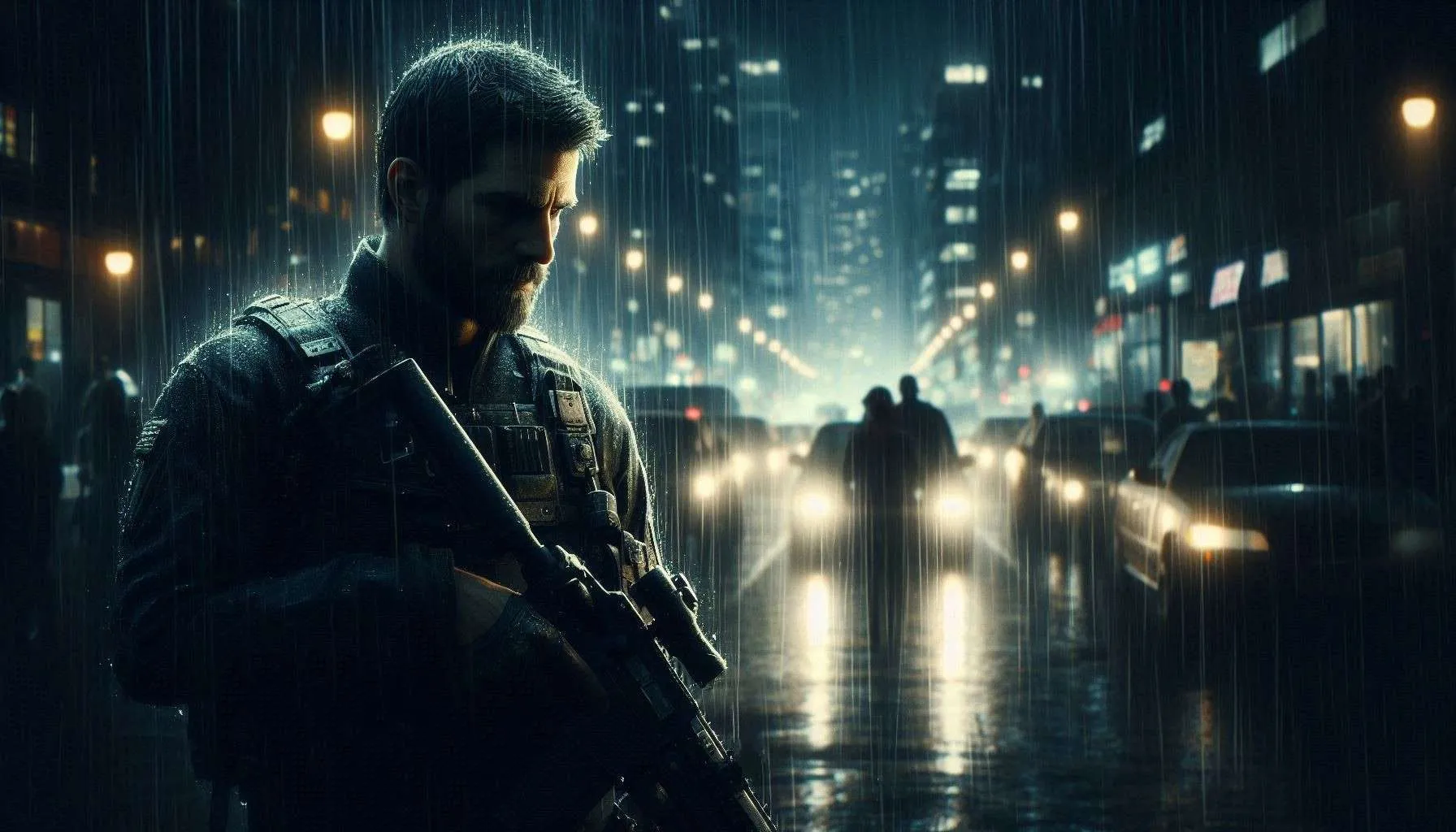
Christian Craighead has finally been able to publish his book One Man In. Beyond the initial horrors of what he fought through in Kenya, he’s had to fight the UK government to get to publication day. I have the book on order from the United States because it is banned here in the UK. So his interview on the Shawn Ryan Show has been my first opportunity to hear his own account of what went down.
The concussive blast hit at 3:17 p.m.
In the open-air courtyard of Nairobi’s DusitD2 complex, a suicide bomber detonated an explosive vest packed with ball bearings and scrap metal. Glass blew out in all directions. Seconds later, four al-Shabaab gunmen in tactical gear stepped past burning sedans, leveling AK-47s and rolling grenades into offices, corridors, and cafes.
Over 700 people survived the slaughter. Most of them owe their lives to the British 22 SAS operator who moved straight toward the gunfire.
On Episode #339 of the Shawn Ryan Show, Christian Craighead gave his definitive, minute-by-minute account of the 22-hour battle alongside his memoir, One Man In. Joining him was Meyli Chapin, an American researcher who spent 17 hours curled beneath a bathroom sink while gunmen executed civilians in the hallways outside.
Their conversation shows modern combat at its rawest: the deafening crack of unsuppressed rifles in enclosed stairwells, the cold sweat of an unarmed civilian waiting for an execution shot, and the bitter institutional politics that followed.

Entering the Kill Zone Alone
Craighead had been in Kenya for barely four weeks as an SAS liaison officer. He had no mission order, no team standing by, and no green light from London when an ex-Royal Marine called his mobile with two words: “Complex attack”.
He sprinted to his truck in civilian clothes, threw his gear into the cab, and punched the throttle into Nairobi’s legendary gridlock. He drove on sidewalks, jumped concrete medians, and squeezed between oncoming commuter buses at 80 miles per hour while Vivaldi’s Four Seasons blasted across the dashboard. When a Kenyan traffic cop tried to flag him down at an intersection, Craighead yelled out the window that he was operating on direct orders from the Kenyan president.
He arrived at 14 Riverside Drive to find three cars burning fiercely and the sound of rifle fire tearing through the complex. At the front gatehouse, eight to twelve armed security guards were crouched under desks.
Craighead asked if anyone had pushed inside to counter the gunmen. They said no. Right then, a woman’s scream echoed from the courtyard, cut dead by a burst of automatic fire.
Craighead turned to the guards:
“Right, I’m going in. You guys coming with me?”
“No, boss,” one replied.
Craighead pulled his balaclava over his face, shouldered his rifle, and walked through the gate alone.
The Hair Salon Evacuation: Moving into an adjacent salon, he discovered roughly 150 civilians jammed into storage closets and washrooms. With incoming rounds ricocheting off the outside walls, Craighead organized two Kenyan police officers into human relays, shoving terrified civilians out the door in tight groups of eight to sprint across the kill zone.
Clearing the Spiral Parking Garage: Linking up with Daniel Prastalo, an armed Slovenian security contractor wearing body armor labeled “Agent”, Craighead cleared a 12-story parking garage. They checked every vehicle and maintenance locker. On the top floor, Craighead yanked open an unlocked metal locker to find a female guard curled inside in pitch darkness. His safety clicked off and his finger was millimeters into the trigger press before his brain registered that she was an unarmed friendly.
Taking Command: When a senior Kenyan police commander found Craighead outside the hotel entrance, he looked at the SAS operator and asked him to lead a squadron of the elite General Service Unit (GSU). Craighead accepted on one condition: he would clear the threshold of every room alone. If someone had to die on entry, it would be him, eliminating the risk of untrained troops shooting innocent civilians in the panic.

Room 316: 17 Hours Under the Sink
Third floor. Room 316. Meyli Chapin had laid down for an afternoon nap when the suicide bomber’s vest exploded directly beneath her window.
The pressure wave rocked the bed. Chapin tore the curtains back to see smoke curling over the flagstones and human flesh plastered across the pavement, including a severed leg still wearing a boot. Then she saw two gunmen walking deliberately through the carnage, rifles raised.
She had no tactical training. She had no weapon. She was 26 years old and convinced she had minutes to live.
The Parting Words: With her hands trembling so violently she could barely tap the glass screen, Chapin texted her father, her mother, and her fiancé the same message: “Terrorist attack on the hotel. I love you.” To her fiancé, she typed three additional words: “More than anything”.
The Hiding Place: Coached by an overseas corporate emergency dispatcher over the phone, Chapin shoved dressers, suitcases, and chairs against the door. She went into the bathroom, pulled all the towels off the lowest open shelf under the vanity and jammed her body into the narrow recess.
The Card Reader: Hours into the darkness, the electronic lock on her door beeped. A keycard slid into the slot. Someone pushed hard against the door, rattling it against the interior security latch. Chapin sat in absolute silence, waiting for the wood to splinter and a round to take her between the eyes. Whoever it was then moved on down the hall.
The Glass Staircase: Later that night, the gunmen retreated up the main hotel stairwell outside her room, shouting in Somali as they shattered the multi-story glass panels with rifle fire.
For Chapin, the turning point was a single sentence texted from her security team: US and UK special forces were on site. As she told Ryan, the contrast was staggering: strangers were trying to slaughter her, and a stranger who was trying to save her.

Simon, Sully, and the Hail Mary
Throughout the five-hour interview, Craighead and Ryan return to a thread of uncanny occurrences that seemed to bend time and probability around the siege.
Hours before the first shot, Craighead broke standard security protocol by picking up a hitchhiker outside Nairobi. The man wore a safari suit and polished dress shoes, introduced himself as “Simon,” and happened to share Craighead’s birth month and year. He pulled out a double-pointed blade known as a Kris dagger, saying he carried it to fight demons along the road. When Craighead dropped him off, the man’s voice took on an unnatural resonance:
“Chris, may God bless you many times this day.”
The suicide bomber detonated at 3:17 p.m., the exact minute that US Airways Flight 1549 struck a flock of birds over the Hudson River precisely ten years earlier to the day, an incident Craighead had studied extensively.
These strange synchronicities culminated during the final standoff on the hotel’s sixth floor. Two terrorists had fortified themselves inside the top-floor gym, tossing grenades down the stairwell into the elevator lobby. Craighead was number one in the stack.
In the darkness above, the gunmen began reciting their final Islamic prayers, signaling an imminent suicide push. Craighead countered under his breath with the Catholic Hail Mary.
He reached the words “now and at the hour of our death” when four hand grenades bounced down the concrete steps.
The blasts shook the stairwell, but the shrapnel missed the stack. Craighead surged through the cordite smoke. The first gunman reached the landing, spraying an AK-47 on full automatic. Craighead put three rounds into his chest, then finished the engagement with a direct headshot before taking the legs out from the second attacker behind him.
The Rat Run: Blood, CS Gas, and Scalding Water
Neutralizing the gym was not the end. Intelligence arrived that two remaining al-Shabaab fighters were holed up in the hotel’s service basement, a labyrinth of laundry shoots, maintenance corridors, and delivery bays.
Craighead stacked up with Kenyan operators and pushed through the hotel kitchen. The industrial ovens had been running unattended for 15 hours. The room was superheated, thick with the rancid smell of burned meat and heavy grease.
They breached into the service corridor. Grenade blasts had ruptured the plumbing overhead, sending near-boiling water raining down from shattered pipes. The floor was ankle-deep in steaming water that scalded Craighead’s unprotected head and neck while the Kenyan troops’ helmets took the brunt.
The corridor went pitch-black except for weapon-mounted lights cutting through the steam. A terrorist stepped out, dumping a magazine down the funnel. Craighead leaned out from an office doorway, spotted the muzzle flash in the dark, and fired five rounds into the shadow to the left of the muzzle flash.
The last fighter retreated behind reinforced glass doors that deflected 5.56mm rounds, mocking the operators through the glass. The Kenyans brought up a shotgun to fire CS gas canisters, followed by an M72 LAW rocket launcher. After a furious exchange of fire and a final grenade tossed over cardboard boxes, both terrorists bled out on the slick concrete floor.
The State Turns on the Operator
The aftermath proved more hostile than the siege. Despite receiving the Conspicuous Gallantry Cross from Queen Elizabeth II, Craighead found himself targeted by his own ministry.
During a break in Ryan’s Nashville studio, Craighead checked his phone: the UK Ministry of Defence had initiated legal action to serve him with an injunction on American soil to block the publication of One Man In.
Craighead laid out the roots of the establishment’s hostility:
No State Secrets: The manuscript passed review confirming zero compromise of ongoing SAS methods or classified intelligence. They simply wanted to hold him to his Spec Ops NDA despite this operation not being one he did for UKSF and he’d actually been charged at one point over the phone by the Kenyan Director of National Intelligence (sitting next to the president) to lead the response to the attack.
The “Mutineer” Stigma: Military bureaucrats openly resented that an uncommissioned, working-class operator acted without Whitehall’s permission, arguing his solo initiative set a dangerous precedent for insubordination.
Cultural Discomfort: Craighead believes his vocal Christian faith, unapologetic working-class identity, and public support for Donald Trump made him an uncomfortable hero for modern British administrative culture.
The Cost of Speaking: Craighead had to sell his military medals to pay over $130,000 in personal legal fees. If he flies home to the UK today, he faces immediate arrest.
Meyli Chapin cut through the politics with the perspective of someone who was marked for execution:
“Christian didn’t go through that hotel opening doors and saying, ‘Are you from this nation? Are you this religion?’ He went through every door and saved every person because they were innocent. If you hear that story and you twist it to be about some agenda, that is a personal insult to every single person he saved.”
The Long Road Out
When the shooting stopped, the physiological crash hit hard. Unsuppressed rifle fire and grenade concussions in enclosed concrete halls caused severe acoustic trauma, requiring doctors to plunge long needles into Craighead’s ears to inject steroids. For three months, massive adrenaline depletion triggered random, uncontrollable weeping fits. Such an experience has a way of continuing to wreak havoc long after it was physically over.
Chapin dealt with the brutal isolation of civilian PTSD. She channeled the survivor’s guilt, rage, and sleep deprivation into her memoir, Terrorist Attack Girl, and created Trauma Brace, a digital recovery platform designed to give trauma victims accessible therapeutic tools.
The conversation on the Shawn Ryan Show proves that while combat lasts hours, the fight to hold onto your humanity and tell the truth can last a lifetime. Craighead walked into a burning hotel because innocent people were being slaughtered. The courage that took remains unchanged, no matter what court order arrives in his inbox.
I hope that everyone will support the brave and ritious actions of Christian Craighead by purchasing his book One Man In. Unsure, then watch the below episode of the Shawn Ryan Show.


Leave a Reply